
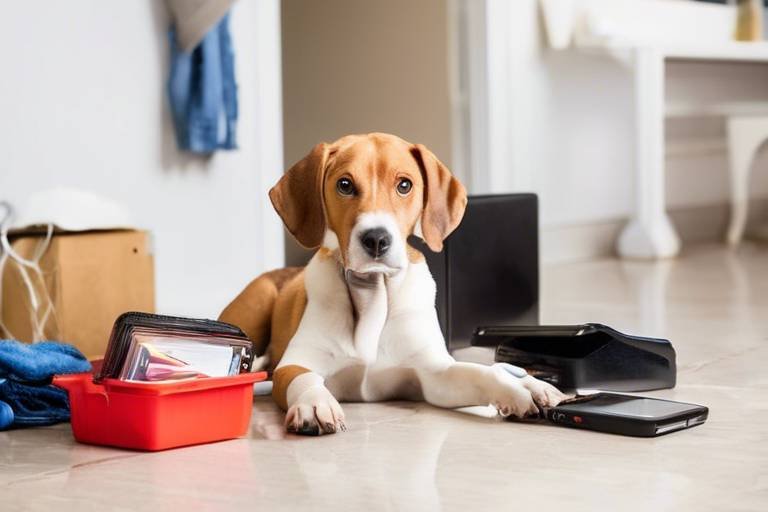
Teaching your dog to leave items alone is not just about protecting your belongings; it’s about creating a safer environment for your furry friend. Imagine a world where your dog walks past that tempting shoe or deliciously smelly snack without a second glance. Sounds dreamy, right? With the right techniques and a sprinkle of patience, you can turn that dream into reality. This article provides a comprehensive guide on training your dog to ignore unwanted items, ensuring a safer environment for both your pet and your belongings.
To effectively teach your dog to leave items alone, it’s essential to understand their instincts and behaviors. Dogs are naturally curious creatures, driven by their senses. They explore the world through their noses and mouths, which can sometimes lead to trouble. By grasping the reasons behind your dog’s actions, you can tailor your training approach for better results. For instance, when your dog sniffs out something interesting, they might feel compelled to investigate further. Recognizing these tendencies helps you anticipate their actions and intervene at the right moment.
Before diving into the specifics of teaching your dog to leave items alone, establishing basic commands like sit and stay is crucial. These commands serve as the foundation for more advanced training techniques. Think of it as building a house; without a solid foundation, the structure will crumble. Once your dog masters these basic commands, you can seamlessly transition to teaching them to ignore distractions. Start small, and gradually increase the complexity of the tasks as your dog becomes more comfortable.
Consistency in commands and training sessions is vital for your dog’s learning process. Dogs thrive on routine and repetition, which reinforces the desired behavior. If you use different commands or vary your tone, it can confuse your dog, making it harder for them to understand what you expect. Imagine trying to learn a new language where the rules change every day—frustrating, right? By maintaining a consistent approach, you’re helping your dog grasp the concept of leaving items alone more effectively.
Creating a regular training schedule helps your dog anticipate sessions and stay focused. Just like humans, dogs benefit from a structured routine. A well-defined schedule not only enhances their ability to learn but also fosters a sense of security. You might want to set aside 10-15 minutes a day for training, gradually increasing the duration as your dog becomes more adept. Consistency is key, so try to stick to the same time each day to build that routine.
Positive reinforcement is a powerful tool in dog training. By using treats, praise, or affection, you encourage your dog to repeat desired behaviors. When your dog successfully ignores an item, shower them with praise or offer a tasty treat. This approach makes the training process enjoyable for both you and your pet. Imagine if every time you did something right, you received a reward—wouldn’t that motivate you to keep going? That’s the essence of positive reinforcement!
Gradually introducing distractions during training sessions helps your dog learn to ignore tempting items. Start with low-level distractions and gradually increase the difficulty. For instance, you might begin by placing a toy nearby while practicing commands. As your dog becomes more focused, you can introduce more enticing distractions, such as food or other items they usually find irresistible. This gradual exposure reinforces their ability to focus on your commands despite external stimuli.
Implementing practical techniques, such as the leave it command, can significantly improve your dog’s ability to leave items alone. This command is essential for teaching your dog self-control and impulse management. When you give the command, be sure to reward your dog when they obey. It’s like teaching them to resist that last piece of cake at a party—difficult, but rewarding!
Utilizing toys during training sessions can make the process engaging for your dog. By incorporating play into training, you allow them to learn while having fun. You might use a favorite toy as a distraction and practice the leave it command. This way, your dog associates leaving items alone with positive experiences, making the lesson stick. After all, who doesn’t love playtime?
Gradually exposing your dog to various items while practicing commands helps them become accustomed to ignoring distractions. Start with items that are less appealing and slowly work your way up to more tempting ones. This technique strengthens their training and self-control, ensuring they learn to resist the urge to grab or chew on items they shouldn’t. Think of it as building their confidence—each successful session reinforces their ability to make good choices.
Regularly monitoring your dog’s progress and adjusting your training techniques as needed ensures continued improvement. Just like humans, dogs can have off days, so it’s essential to be flexible and adjust your approach based on their mood and responsiveness. Keeping a training journal can help you track what works and what doesn’t, fostering a stronger bond and better understanding between you and your pet.
- How long does it take to train my dog to leave items alone? Training time varies by dog, but with consistency and patience, you can see progress in a few weeks.
- What should I do if my dog doesn’t respond to commands? If your dog struggles, consider revisiting basic commands or seeking professional training help.
- Can I use negative reinforcement? It’s generally more effective to focus on positive reinforcement, as it builds trust and encourages good behavior.
Understanding Your Dog’s Behavior
To effectively teach your dog to leave items alone, it’s essential to understand their instincts and behaviors. Dogs are naturally curious creatures, driven by their senses. Their sense of smell is particularly strong, which can lead them to investigate items that may not be safe or appropriate for them to have. Think of your dog as a little explorer, always on the lookout for new and exciting things to discover. This innate curiosity can sometimes lead to unwanted behaviors, such as chewing on furniture or scavenging through trash. Therefore, understanding what motivates your dog is key to creating a successful training plan.
Dogs often react to their environment based on their experiences and instincts. For example, if a dog has previously found food on the floor or a toy that was left unattended, they may be more inclined to investigate similar situations in the future. This behavior can be likened to a child who learns that candy is often found in a certain cupboard; they will keep checking there until they are taught otherwise. Recognizing these patterns is crucial for you as a pet owner. By understanding what drives your dog’s behavior, you can tailor your training methods to better suit their needs.
Moreover, dogs communicate through body language, which can provide insights into their feelings and intentions. For instance, if your dog approaches an item with a wagging tail, they may be excited or curious. Conversely, if they seem tense or hesitant, they might be unsure about the item. Paying attention to these cues can help you gauge when to intervene and redirect their focus. Understanding your dog’s body language is like learning a new language; once you grasp it, you can communicate more effectively with your furry friend.
In addition to instincts and body language, it’s important to consider the role of socialization in your dog’s behavior. Dogs are pack animals, and their interactions with other dogs and humans can significantly influence how they behave around objects. A well-socialized dog is often more confident and less likely to engage in destructive behaviors, as they have learned appropriate ways to interact with their environment. Just like humans, dogs thrive on positive experiences and learn from them. So, providing your dog with opportunities to socialize can greatly improve their behavior.
To sum it up, understanding your dog’s behavior involves recognizing their instincts, interpreting their body language, and considering their social experiences. By doing so, you can create a more effective training regimen that not only teaches them to leave items alone but also enriches their overall well-being. Remember, patience and empathy are your best tools in this journey. After all, training is not just about correcting behavior; it’s about building a deeper connection with your dog.
- Why does my dog chew on everything? Dogs chew due to curiosity, boredom, or anxiety. Providing them with appropriate chew toys can help redirect this behavior.
- How long will it take to train my dog to leave items alone? The time it takes varies by dog and consistency in training. With regular practice, many dogs can learn this command within a few weeks.
- What should I do if my dog ignores the ‘leave it’ command? If your dog ignores the command, ensure you’re using positive reinforcement and gradually increasing distractions during training.
Establishing Basic Commands
Before diving into the world of training your dog to leave items alone, it’s crucial to lay a solid foundation with basic commands. Think of these commands as the building blocks of your dog’s training. Without them, trying to teach more complex behaviors can feel like trying to build a house on sand. Commands like sit and stay are not just random words; they serve as vital tools that help establish communication between you and your furry friend.
When teaching these commands, it’s essential to use a friendly and encouraging tone. Dogs, much like humans, respond better to positive vibes. Imagine you’re in a classroom, and the teacher is engaging and enthusiastic—wouldn’t you be more inclined to participate and learn? The same principle applies to your dog. Start with the sit command. You can do this by holding a treat above your dog’s nose and slowly moving it back over their head. As their nose follows the treat, their bottom will naturally lower to the ground. The moment they sit, shower them with praise and give them the treat. This positive reinforcement helps them associate the command with a rewarding experience.
Once your dog has mastered sit, it’s time to introduce the stay command. This one can be a bit trickier, but with patience, your dog will get the hang of it. Start by asking your dog to sit, then hold your hand out in front of you like a stop sign and say “stay.” Take a step back. If your dog remains in place, return to them and reward them with a treat and praise. If they move, gently guide them back to the original position and try again. The key here is to gradually increase the distance and duration of the stay command.
Now, let’s talk about consistency. This is where many dog owners stumble. Imagine trying to learn a new language, but your teacher keeps changing the rules. Frustrating, right? Your dog needs to understand that the same commands mean the same thing every time. Use the same words and hand signals consistently, and practice regularly. A good rule of thumb is to have short training sessions—around 5 to 10 minutes—several times a day. This keeps your dog engaged without overwhelming them.
Incorporating these basic commands into your daily routine can also be incredibly beneficial. For instance, ask your dog to sit before meals, during walks, or when greeting guests. This not only reinforces their training but also helps them understand the importance of these commands in various situations. Over time, you’ll find that your dog begins to respond more reliably, paving the way for more advanced training techniques.
In summary, establishing basic commands like sit and stay is essential for training your dog to leave items alone. By using positive reinforcement, maintaining consistency, and incorporating these commands into everyday life, you’ll create a strong foundation for your dog’s training journey. Remember, every dog learns at their own pace, so be patient and celebrate the small victories along the way!
sit
This article provides a comprehensive guide on training your dog to ignore unwanted items, ensuring a safer environment for both your pet and your belongings.
To effectively teach your dog to leave items alone, it’s essential to understand their instincts and behaviors, which can help tailor your training approach for better results.
Before teaching your dog to leave items alone, establishing basic commands like and stay is crucial, as these will serve as the foundation for more advanced training techniques.
Consistency in commands and training sessions is vital for your dog’s learning process, reinforcing the desired behavior and helping them understand what is expected.
Creating a regular training schedule helps your dog anticipate sessions and stay focused, enhancing their ability to learn and retain new commands effectively.
Positive reinforcement, such as treats and praise, encourages your dog to repeat desired behaviors, making the training process enjoyable and effective for both you and your pet.
Gradually introducing distractions during training sessions helps your dog learn to ignore tempting items, reinforcing their ability to focus on your commands despite external stimuli.
Implementing practical techniques, such as the leave it command, can significantly improve your dog’s ability to leave items alone, fostering better habits and reducing unwanted behaviors.
Utilizing toys during training sessions can make the process engaging for your dog, allowing them to learn while playing and associating positive experiences with leaving items alone.
Gradually exposing your dog to various items while practicing commands helps them become accustomed to ignoring distractions, ultimately strengthening their training and self-control.
Regularly monitoring your dog’s progress and adjusting your training techniques as needed ensures continued improvement, fostering a stronger bond and better understanding between you and your pet.
One of the most fundamental commands you can teach your dog is . This simple yet effective command lays the groundwork for all other training. When your dog understands how to sit on command, it not only makes it easier for them to learn more complex commands but also helps to manage their behavior in various situations. Imagine trying to have a conversation with a friend while they are jumping around excitedly; it’s distracting, right? The same goes for your dog. Teaching them to sit helps to calm their excitement and focus their attention on you.
To teach your dog to sit, follow these steps:
- Start with a Treat: Hold a treat close to your dog’s nose to grab their attention.
- Move the Treat Upward: Slowly move the treat upwards, causing their head to follow the treat. As their head goes up, their bottom will naturally lower.
- Say ‘Sit’: As soon as their bottom touches the ground, say “sit” and give them the treat.
- Repeat: Practice this several times daily until your dog sits on command without the treat.
Consistency is key here! Make sure everyone in the household uses the same command and gestures. This will prevent confusion for your furry friend. Once your dog has mastered sitting, you can start using it in real-life situations, like when guests arrive or during meal times. This not only reinforces the command but also helps your dog learn to be patient and calm.
Q: How long does it take to train my dog to sit?
A: Training time varies depending on the dog’s age, breed, and temperament. Most dogs can learn to sit within a few sessions, but some may take longer. Patience and consistency are crucial!
Q: What if my dog doesn’t respond to the sit command?
A: If your dog isn’t responding, try using higher-value treats or reducing distractions in the environment. It may take some time for them to understand the command fully.
Q: Can I teach my dog to sit without treats?
A: Yes! You can use praise, toys, or playtime as rewards. The key is to find what motivates your dog the most.
and
This article provides a comprehensive guide on training your dog to ignore unwanted items, ensuring a safer environment for both your pet and your belongings.
To effectively teach your dog to leave items alone, it’s essential to understand their instincts and behaviors, which can help tailor your training approach for better results. Dogs are naturally curious creatures, often driven by their instincts to explore their environment. This means that they might be tempted to chew on shoes, grab food off the table, or investigate any intriguing object that catches their eye. Recognizing these tendencies allows you to anticipate your dog’s behavior and prepare accordingly. Think of it like being a detective; the more you know about your furry friend, the better equipped you are to guide them away from trouble.
Before teaching your dog to leave items alone, establishing basic commands like sit and stay is crucial, as these will serve as the foundation for more advanced training techniques. These commands not only help in everyday situations but also reinforce your dog’s understanding of what is expected of them. When your dog knows how to sit or stay, you can redirect their attention when they show interest in something they shouldn’t be touching. It’s like giving them a map to navigate through the maze of their curiosity.
Consistency in commands and training sessions is vital for your dog’s learning process, reinforcing the desired behavior and helping them understand what is expected. Imagine trying to learn a new language where the rules keep changing; it would be confusing, right? The same goes for your dog. By using the same commands and signals every time, you create a clear and predictable environment that fosters learning. Remember, dogs thrive on routine, and by being consistent, you help them build a strong foundation of trust and understanding.
Creating a regular training schedule helps your dog anticipate sessions and stay focused, enhancing their ability to learn and retain new commands effectively. Just like we humans benefit from a structured routine, dogs do too! Try setting aside a specific time each day for training. This could be a 15-minute session in the morning or a quick refresher in the evening. The key is to make it a habit. Over time, your dog will look forward to these moments, and you’ll notice their eagerness to learn and engage.
Positive reinforcement, such as treats and praise, encourages your dog to repeat desired behaviors, making the training process enjoyable and effective for both you and your pet. Think of it as a reward system; when your dog successfully leaves an item alone, shower them with affection or give them a tasty treat. This not only reinforces the behavior but also strengthens the bond between you two. Just like we feel motivated when someone praises our efforts, dogs thrive on positive feedback!
Gradually introducing distractions during training sessions helps your dog learn to ignore tempting items, reinforcing their ability to focus on your commands despite external stimuli. Start with low-level distractions, like a toy nearby, and gradually increase the challenge. It’s similar to training for a marathon; you don’t start by running 26 miles, right? You build up your endurance over time. This way, your dog learns to maintain their focus even when the world around them is buzzing with excitement.
Implementing practical techniques, such as the leave it command, can significantly improve your dog’s ability to leave items alone, fostering better habits and reducing unwanted behaviors. This command is a game-changer! When your dog understands that “leave it” means to ignore an object, you’re setting them up for success. Start by holding a treat in your hand and saying “leave it.” When they do, reward them with the treat. It’s all about creating that connection between the command and the desired action.
Utilizing toys during training sessions can make the process engaging for your dog, allowing them to learn while playing and associating positive experiences with leaving items alone. For instance, you can use their favorite toy as a distraction and practice the “leave it” command. This not only keeps things fun but also helps your dog understand the concept of leaving items alone in a playful context. Just like kids learn through play, dogs also benefit from a fun and interactive training approach.
Gradually exposing your dog to various items while practicing commands helps them become accustomed to ignoring distractions, ultimately strengthening their training and self-control. Start with less tempting items and slowly introduce more appealing ones. It’s akin to building a tolerance; the more they practice, the better they get. Over time, your dog will learn that they can resist the urge to grab that sock or snack, and you’ll be amazed at their progress!
Regularly monitoring your dog’s progress and adjusting your training techniques as needed ensures continued improvement, fostering a stronger bond and better understanding between you and your pet. Keep a journal of your training sessions, noting what works and what doesn’t. This not only helps you stay organized but also allows you to celebrate the small victories. Remember, training is a journey, not a race. Each step forward is a step towards a well-behaved and happy dog!
- How long does it take to train my dog to leave items alone?
The time varies based on your dog’s age, breed, and previous training. Consistent practice can lead to noticeable progress in a few weeks.
- What if my dog doesn’t respond to the “leave it” command?
Be patient and consistent. Sometimes, distractions can be overwhelming. Go back to basics and gradually increase the level of distraction.
- Can I use negative reinforcement?
It’s generally more effective to use positive reinforcement. Negative reinforcement can lead to fear and anxiety, which can hinder training.
stay
This article provides a comprehensive guide on training your dog to ignore unwanted items, ensuring a safer environment for both your pet and your belongings.
To effectively teach your dog to leave items alone, it’s essential to understand their instincts and behaviors, which can help tailor your training approach for better results.
Before teaching your dog to leave items alone, establishing basic commands like sit and is crucial, as these will serve as the foundation for more advanced training techniques.
Consistency in commands and training sessions is vital for your dog’s learning process, reinforcing the desired behavior and helping them understand what is expected.
Creating a regular training schedule helps your dog anticipate sessions and stay focused, enhancing their ability to learn and retain new commands effectively.
Positive reinforcement, such as treats and praise, encourages your dog to repeat desired behaviors, making the training process enjoyable and effective for both you and your pet.
Gradually introducing distractions during training sessions helps your dog learn to ignore tempting items, reinforcing their ability to focus on your commands despite external stimuli.
Implementing practical techniques, such as the leave it command, can significantly improve your dog’s ability to leave items alone, fostering better habits and reducing unwanted behaviors.
Utilizing toys during training sessions can make the process engaging for your dog, allowing them to learn while playing and associating positive experiences with leaving items alone.
Gradually exposing your dog to various items while practicing commands helps them become accustomed to ignoring distractions, ultimately strengthening their training and self-control.
Regularly monitoring your dog’s progress and adjusting your training techniques as needed ensures continued improvement, fostering a stronger bond and better understanding between you and your pet.
The command is one of the most valuable tools in your training arsenal. It teaches your dog to remain in a specific position until you release them, which can be crucial in preventing them from getting into trouble with unwanted items. To start, have your dog sit in front of you. With a calm voice, say while holding your hand up, palm facing your dog. This hand signal acts as a visual cue that complements your verbal command.
Initially, you should only take a step back. If your dog stays put, reward them with a treat and lots of praise. This positive reinforcement builds a connection between the command and the behavior. If they move, calmly guide them back to the original position without scolding. Remember, patience is key! As your dog becomes more comfortable with the command, gradually increase the distance and duration of the stay.
It’s also beneficial to practice in various environments and situations. This helps your dog learn to generalize the command, making them more reliable in different settings. For instance, try practicing in your backyard, at the park, or even inside your home with distractions around. The more they practice, the better they’ll get!
Finally, always end training sessions on a positive note. If your dog successfully stays, even for a short time, reward them generously. This not only reinforces the behavior but also keeps your dog eager to learn more. Remember, the goal is to create a fun and engaging environment where your dog feels safe and excited to participate!
- How long does it take to train my dog to stay? – Training duration varies by dog, but with consistent practice, many dogs can learn the command within a few weeks.
- What if my dog doesn’t respond to the stay command? – If your dog struggles, revisit the basics and ensure you’re using positive reinforcement. Patience and consistency are essential.
- Can I use stay in different scenarios? – Absolutely! The more varied the practice, the better your dog will understand and respond to the command in different situations.
is crucial, as these will serve as the foundation for more advanced training techniques.
This article provides a comprehensive guide on training your dog to ignore unwanted items, ensuring a safer environment for both your pet and your belongings.
To effectively teach your dog to leave items alone, it’s essential to understand their instincts and behaviors, which can help tailor your training approach for better results.
Before teaching your dog to leave items alone, establishing basic commands like sit and stay is crucial, as these will serve as the foundation for more advanced training techniques. Think of these commands as the building blocks of your dog’s obedience. Just like learning the alphabet is essential for reading, mastering these commands is key for your dog to grasp more complex instructions later on.
To effectively teach these commands, start in a quiet environment free from distractions. Use a firm yet friendly tone to convey your expectations. For instance, when you say “sit,” gently guide your dog into the sitting position if needed. Once they comply, shower them with praise and a treat. This positive reinforcement solidifies their understanding and encourages them to repeat the behavior.
As your dog becomes more comfortable with basic commands, you can begin to incorporate them into your daily routine. For example, ask your dog to sit before feeding them or stay before opening the door. This not only reinforces their training but also helps them understand that these commands are applicable in various situations, making them more reliable over time.
Consistency in commands and training sessions is vital for your dog’s learning process, reinforcing the desired behavior and helping them understand what is expected.
Creating a regular training schedule helps your dog anticipate sessions and stay focused, enhancing their ability to learn and retain new commands effectively.
Positive reinforcement, such as treats and praise, encourages your dog to repeat desired behaviors, making the training process enjoyable and effective for both you and your pet.
Gradually introducing distractions during training sessions helps your dog learn to ignore tempting items, reinforcing their ability to focus on your commands despite external stimuli.
Implementing practical techniques, such as the leave it command, can significantly improve your dog’s ability to leave items alone, fostering better habits and reducing unwanted behaviors.
Utilizing toys during training sessions can make the process engaging for your dog, allowing them to learn while playing and associating positive experiences with leaving items alone.
Gradually exposing your dog to various items while practicing commands helps them become accustomed to ignoring distractions, ultimately strengthening their training and self-control.
Regularly monitoring your dog’s progress and adjusting your training techniques as needed ensures continued improvement, fostering a stronger bond and better understanding between you and your pet.
- How long does it take to train my dog to leave items alone? The time varies by dog, but consistency and patience are key. Most dogs can grasp the command within a few weeks with regular practice.
- What if my dog doesn’t respond to the commands? Ensure you are using positive reinforcement and remain patient. If needed, revisit basic commands and gradually build up to more complex tasks.
- Can I train an older dog? Absolutely! Dogs of all ages can learn new commands. Just be mindful that older dogs may require more time and patience.
The Importance of Consistency
When it comes to training your dog, consistency is key. Just like how we learn best when we have a regular routine, dogs thrive on a structured environment. If you use different commands or vary your expectations from one training session to the next, your furry friend will likely become confused. Imagine trying to learn a new language, but the teacher keeps changing the rules! It would be frustrating, right? Well, that’s how your dog feels when the commands aren’t consistent.
By sticking to the same words and actions, you’re helping your dog establish a clear understanding of what you expect from them. For instance, if you want your dog to understand the command “leave it,” make sure you always use that exact phrase. Don’t switch it up with “drop it” or “don’t touch.” This clarity will help your dog respond more effectively, as they won’t have to guess what you mean. Think of it as building a strong foundation for a house; without a solid base, the structure can become shaky and unstable.
A good way to ensure consistency is to create a training schedule that you can stick to. This doesn’t mean you have to train for hours every day; even short, frequent sessions can be incredibly beneficial. Aim for about 5-10 minutes a day, focusing on the same commands and behaviors. This repetition will help reinforce the learning process and make it easier for your dog to grasp the concepts you’re teaching. You can even keep a training log to track which commands you’ve worked on and the progress made.
It’s also important to involve everyone in your household in the training process. If one person says “leave it” while another says “no,” your dog will be left scratching their head in confusion. So, gather the family and agree on the commands you’ll use, ensuring everyone is on the same page. This collective effort not only reinforces learning but also builds a stronger bond between your dog and the entire family.
In summary, consistency in commands and training sessions is not just a preference; it’s a necessity for effective dog training. By being clear and unified in your approach, you’re setting your dog up for success. Remember, the more consistent you are, the more confident and well-behaved your dog will become!
- How long should I train my dog each day? Short sessions of 5-10 minutes are ideal, focusing on consistency.
- What if my dog doesn’t respond to a command? Go back to basics, ensure you’re being consistent, and use positive reinforcement to encourage them.
- Can I train my dog alone? Yes, but involving family members can help maintain consistency and reinforce the learning process.
Setting a Training Schedule
Establishing a consistent training schedule is a game changer when it comes to teaching your dog to leave items alone. Just like humans thrive on routine, dogs benefit immensely from having a structured training plan. Think of it as setting a rhythm for your dog’s learning process. By scheduling training sessions at the same time each day, you help your furry friend anticipate when it’s time to focus and learn. This anticipation can lead to better concentration and a more engaged attitude during training.
When creating your training schedule, consider your dog’s natural energy levels. Are they more active in the morning or evening? Tailoring your training times to when your dog is most alert can make a significant difference. For instance, if your dog is a morning pup, aim for sessions right after their morning walk, when they are more likely to be receptive to learning. On the other hand, if your dog tends to be more lively in the evening, that might be the best time for training.
In addition to time of day, think about the duration of each training session. Short, focused sessions are often more effective than long, drawn-out ones. Aim for about 5 to 10 minutes per session, especially when starting out. This keeps your dog engaged without overwhelming them. As your dog becomes more accustomed to training, you can gradually increase the length of sessions. Remember, it’s all about quality over quantity!
To help you visualize your training schedule, consider using a simple table:
| Day | Time | Duration | Focus Area |
|---|---|---|---|
| Monday | 8:00 AM | 10 minutes | Leave It Command |
| Wednesday | 6:00 PM | 10 minutes | Distraction Training |
| Friday | 8:00 AM | 10 minutes | Review Commands |
This simple table can serve as a guide to keep you on track and ensure that you’re covering all necessary training areas. Remember to stay flexible; if your dog seems particularly distracted or tired, it’s okay to adjust the schedule as needed. The goal is to create a positive learning environment that fosters growth and understanding between you and your pet.
Lastly, don’t forget to incorporate fun into your training sessions! Mixing in playtime or a favorite toy can make learning feel less like a chore and more like a rewarding experience. After all, a happy dog is a learning dog!
Using Positive Reinforcement
When it comes to training your dog, positive reinforcement is like the secret sauce that makes everything better. Imagine trying to teach a child to ride a bike without a little encouragement—it’s tough, right? The same goes for our furry friends. By rewarding your dog for good behavior, you’re not just teaching them what to do; you’re also building a relationship based on trust and affection. So, how do you effectively implement positive reinforcement in your training sessions?
First and foremost, it’s all about timing. You want to reward your dog immediately after they perform the desired behavior. This could be anything from sitting on command to leaving an item alone. The quicker you can give them a treat or praise, the better they’ll understand what they did right. Think of it as a high-five for your pup! For example, if your dog successfully ignores a tempting shoe, offer them a tasty treat right away. This creates a clear connection in their mind between the action and the reward.
But what should you use as rewards? Well, that can vary from dog to dog. Some dogs might go wild for their favorite treats, while others might be more motivated by playtime or verbal praise. Here’s a quick rundown of effective rewards:
- Treats: Small, tasty morsels work wonders.
- Praise: A cheerful “Good boy!” or “Good girl!” can boost their confidence.
- Toys: A quick game with their favorite toy can be a great reward.
Another critical aspect of positive reinforcement is to ensure that the rewards are consistent. If you reward your dog for leaving an item alone one day but ignore them the next, it can confuse them. Consistency helps solidify the behavior you want to see. To keep things exciting, mix up the rewards. For instance, if you usually give treats, occasionally switch it up with a fun game or extra belly rubs. This unpredictability can keep your dog engaged and eager to learn.
Lastly, be patient! Training takes time, and every dog learns at their own pace. Celebrate the small victories along the way. Maybe your dog didn’t completely ignore the item at first, but they showed interest and then turned away. That’s progress! Remember, the goal is to create a positive learning environment where your dog feels safe and happy. With consistent practice and lots of love, your dog will learn to leave unwanted items alone, making for a happier home for both of you.
Q: How long should training sessions last?
A: Keep training sessions short and sweet—about 5 to 10 minutes. This helps prevent your dog from getting bored or frustrated.
Q: What if my dog doesn’t respond to treats?
A: Every dog is different! Experiment with various rewards like toys or praise until you find what motivates your pup the most.
Q: Can I use negative reinforcement?
A: While some trainers advocate for negative reinforcement, it’s generally less effective and can harm the bond between you and your dog. Focus on positive methods for the best results.
Q: How do I know if my dog understands the command?
A: If your dog consistently responds to the command with the desired behavior, they likely understand it. If not, it may be time to revisit your training methods.
Incorporating Distractions
Training your dog to leave items alone can be a bit like teaching a toddler not to touch the cookie jar. It’s all about patience and strategy. One effective method is to gradually introduce distractions during your training sessions. Imagine trying to concentrate on a task while someone is waving a shiny object in front of you; it’s tough, right? Dogs are no different. By slowly adding distractions, you help your furry friend learn to focus on your commands, even when the world around them is full of temptations.
Start with low-level distractions. This could be as simple as placing a toy nearby while you practice commands like “leave it”. As your dog begins to grasp the concept, gradually increase the difficulty. You might introduce items that are more appealing, such as treats or their favorite toys. The key here is to ensure that your dog is successful in ignoring these distractions at each stage before moving on to the next level. Think of it as building a muscle; you wouldn’t start lifting heavy weights without first mastering the basics.
During these sessions, it’s crucial to maintain a calm and positive environment. If your dog gets too distracted or anxious, take a step back and simplify the task. You can also use a high-value reward, like a special treat or extra playtime, to encourage them when they successfully ignore a distraction. This positive reinforcement not only motivates your dog but also strengthens the bond between you two. A well-timed “good dog!” can go a long way in making your training sessions enjoyable.
To track your progress, consider keeping a simple training log. You could create a table like the one below to note the distractions introduced, your dog’s response, and any adjustments needed for future sessions:
| Date | Distraction Introduced | Response | Notes |
|---|---|---|---|
| MM/DD/YYYY | Low-value toy | Ignored | Good focus, increase difficulty next time |
| MM/DD/YYYY | High-value treat | Distracted | Need to practice more with low distractions |
By incorporating distractions in a structured way, you’re not only training your dog to leave items alone but also helping them develop self-control. It’s a journey, and just like any adventure, it has its ups and downs. But with consistency and love, you’ll both come out stronger on the other side!
Q: How long does it take to train my dog to leave items alone?
A: The time it takes varies by dog. Some may pick it up in a few weeks, while others may need several months. Consistency is key!
Q: What if my dog doesn’t respond to the “leave it” command?
A: If your dog isn’t responding, try using higher-value treats or practice in a less distracting environment. Patience is essential!
Q: Can I use this training for other commands?
A: Absolutely! The principles of distraction and positive reinforcement can be applied to many commands beyond “leave it.”
Practical Training Techniques
When it comes to training your dog to leave items alone, practical techniques can make all the difference. One of the most effective commands to teach is the leave it command. This command not only helps your dog understand what you want them to ignore, but it also fosters better habits and reduces unwanted behaviors. Imagine you’re out for a walk, and your dog spots a delicious piece of food on the ground. Instead of lunging for it, they respond to your command and walk past it. This is the kind of control you can achieve with consistent training!
To start, you can use treats to reinforce the leave it command. Begin by holding a treat in your closed fist and letting your dog sniff it. When they try to get it, say “leave it.” As soon as they back away, praise them and give them a different treat from your other hand. This teaches them that ignoring the first treat leads to a better reward. It’s essential to practice this in a quiet environment before introducing distractions, as this will set them up for success.
Another effective technique is to utilize toys during training sessions. Dogs love to play, and incorporating toys can make the learning process feel more like fun than work. You can start by showing your dog a toy and then using the leave it command. When they successfully ignore the toy, reward them with a treat or playtime with a different toy. This not only reinforces the command but also associates leaving items alone with positive experiences.
As your dog becomes more proficient at ignoring toys and treats, gradually expose them to various items that they might find tempting in everyday life. For example, place a few of their toys or items around the house and practice the leave it command. This gradual exposure helps them become accustomed to ignoring distractions, ultimately strengthening their training and self-control. The key is to remain patient and consistent, as every dog learns at their own pace.
Lastly, remember that training should be a fun and rewarding experience for both you and your dog. Celebrate their successes, no matter how small, and be sure to adjust your techniques if you notice they’re struggling. If your dog seems overwhelmed, take a step back and simplify the training session. With time, patience, and the right techniques, you’ll be amazed at how quickly your dog can learn to leave items alone!
- How long does it take to train my dog to leave items alone? The time it takes can vary greatly depending on your dog’s age, temperament, and previous training. With consistent practice, many dogs can learn within a few weeks.
- Can I train an older dog using these techniques? Absolutely! While younger dogs may learn faster, older dogs can also be trained successfully. Just be patient and adjust your methods to suit their pace.
- What if my dog doesn’t respond to the leave it command? If your dog is struggling, consider reducing distractions and practicing in a quieter environment. Gradual exposure is key, and patience is essential!
leave it
This article provides a comprehensive guide on training your dog to ignore unwanted items, ensuring a safer environment for both your pet and your belongings.
To effectively teach your dog to leave items alone, it’s essential to understand their instincts and behaviors, which can help tailor your training approach for better results.
Before teaching your dog to leave items alone, establishing basic commands like sit and stay is crucial, as these will serve as the foundation for more advanced training techniques.
Consistency in commands and training sessions is vital for your dog’s learning process, reinforcing the desired behavior and helping them understand what is expected.
Creating a regular training schedule helps your dog anticipate sessions and stay focused, enhancing their ability to learn and retain new commands effectively.
Positive reinforcement, such as treats and praise, encourages your dog to repeat desired behaviors, making the training process enjoyable and effective for both you and your pet.
Gradually introducing distractions during training sessions helps your dog learn to ignore tempting items, reinforcing their ability to focus on your commands despite external stimuli.
Implementing practical techniques, such as the command, can significantly improve your dog’s ability to leave items alone, fostering better habits and reducing unwanted behaviors.
Utilizing toys during training sessions can make the process engaging for your dog, allowing them to learn while playing and associating positive experiences with leaving items alone.
Gradually exposing your dog to various items while practicing commands helps them become accustomed to ignoring distractions, ultimately strengthening their training and self-control.
Regularly monitoring your dog’s progress and adjusting your training techniques as needed ensures continued improvement, fostering a stronger bond and better understanding between you and your pet.
The command is one of the most powerful tools in your training arsenal. It teaches your dog to ignore items that could be dangerous or distracting, allowing them to focus on you instead. Imagine you’re on a walk, and your dog spots something interesting on the ground—maybe a piece of food or a shiny object. With the command, you can prevent them from picking it up, keeping them safe and your walks pleasant.
To start teaching , you’ll want to use a few simple steps. Begin in a quiet environment free from distractions. Hold a treat in your hand and let your dog sniff it, but don’t give it to them just yet. When they try to get the treat, close your hand. As soon as they back away, praise them and give them a different treat from your other hand. This teaches them that not going for the item leads to rewards.
Next, introduce the verbal cue “leave it.” Say the command just before you close your hand around the treat. With repetition, your dog will start to associate the command with the action of leaving the item alone. Once they grasp this, you can gradually increase the difficulty by placing the treat on the ground and asking them to leave it. Always reward them for compliance, reinforcing the behavior you want to see.
Here are some tips to enhance the effectiveness of the command:
- Practice in different environments to generalize the command.
- Use higher-value treats to encourage your dog to focus on you.
- Be patient and consistent; some dogs may take longer to learn than others.
Remember, the goal is to create a positive learning experience. If your dog struggles, take a step back and simplify the exercise. With time and practice, your dog will learn that ignoring unwanted items brings them rewards, making the command a crucial part of their training toolkit.
Every dog learns at their own pace. With consistent practice, many dogs can grasp the command in a few weeks. Patience is key!
Yes, the “leave it” command can be used for various distractions, including food, toys, and even other animals. Just ensure you practice in different scenarios.
If your dog ignores the command, it might be due to distractions or lack of understanding. Go back to basics and practice in a quieter setting, gradually increasing distractions.
Absolutely! Positive reinforcement is essential for effective training. It builds a strong bond between you and your dog, making them more eager to learn.
command, can significantly improve your dog’s ability to leave items alone, fostering better habits and reducing unwanted behaviors.
This article provides a comprehensive guide on training your dog to ignore unwanted items, ensuring a safer environment for both your pet and your belongings.
To effectively teach your dog to leave items alone, it’s essential to understand their instincts and behaviors, which can help tailor your training approach for better results.
Before teaching your dog to leave items alone, establishing basic commands like sit and stay is crucial, as these will serve as the foundation for more advanced training techniques.
Consistency in commands and training sessions is vital for your dog’s learning process, reinforcing the desired behavior and helping them understand what is expected.
Creating a regular training schedule helps your dog anticipate sessions and stay focused, enhancing their ability to learn and retain new commands effectively.
Positive reinforcement, such as treats and praise, encourages your dog to repeat desired behaviors, making the training process enjoyable and effective for both you and your pet.
Gradually introducing distractions during training sessions helps your dog learn to ignore tempting items, reinforcing their ability to focus on your commands despite external stimuli.
Implementing practical techniques, such as the leave it command, can significantly improve your dog’s ability to leave items alone, fostering better habits and reducing unwanted behaviors.
Utilizing toys during training sessions can make the process engaging for your dog, allowing them to learn while playing and associating positive experiences with leaving items alone.
The leave it command is one of the most powerful tools in your training arsenal. It teaches your dog to ignore distractions, whether it’s a shoe, a snack on the floor, or even a squirrel outside the window. Imagine your dog being able to stroll past a tempting item without a second glance; it’s not just a dream, it can be a reality! When you teach your dog this command, you’re not only enhancing their obedience but also fostering a sense of self-control.
To effectively teach the leave it command, start by holding a treat in your closed hand and allowing your dog to sniff it. When they try to get it, say “leave it” in a firm but calm voice. Most dogs will eventually back off, and that’s your cue to reward them with a different treat from your other hand. This method not only reinforces the command but also teaches them that patience can lead to an even better reward. Over time, you can increase the difficulty by placing the treat on the ground or using more enticing items.
It’s essential to practice this command in various environments to ensure your dog can generalize the behavior. Start in a quiet room and gradually introduce more distractions like toys or food items. Remember, the goal is to create a scenario where your dog can focus on you and ignore the distractions around them.
Gradually exposing your dog to various items while practicing commands helps them become accustomed to ignoring distractions, ultimately strengthening their training and self-control.
Regularly monitoring your dog’s progress and adjusting your training techniques as needed ensures continued improvement, fostering a stronger bond and better understanding between you and your pet.
- How long does it take to teach my dog the “leave it” command? Training times vary, but with consistent practice, many dogs can learn the command within a few weeks.
- What should I do if my dog doesn’t respond to the command? If your dog is struggling, consider reducing distractions and practicing in a quieter environment. Gradually increase the challenge as they improve.
- Can I use “leave it” for other situations? Absolutely! This command can be used in various scenarios, such as preventing your dog from picking up harmful items during walks.
Using Toys for Training
When it comes to teaching your dog to leave items alone, incorporating toys into your training sessions can be a game changer. Dogs, much like children, thrive on play and interaction, and using toys can make the training process not only effective but also incredibly fun. Imagine turning a mundane training session into an exciting adventure where your dog is motivated to learn and engage. By using toys, you’re tapping into your dog’s natural instincts to play and explore, which can significantly enhance their ability to focus and respond to commands.
One effective method is to use a variety of toys that your dog loves. You can start by introducing a toy that your dog is particularly fond of and then use it as a reward during training. For instance, when your dog successfully follows the “leave it” command, you can toss the toy as a reward, creating a positive association with the command. This not only encourages them to obey but also reinforces the idea that leaving items alone can lead to fun and playtime.
Additionally, it’s essential to rotate the toys you use during training sessions. Dogs can quickly become bored with the same toys, which can lead to a lack of interest in training. By mixing it up, you keep your dog’s attention sharp and their enthusiasm high. You might consider creating a toy schedule where you introduce different toys each week, allowing your dog to experience new challenges and maintain their excitement about training.
Furthermore, you can use toys to simulate real-life scenarios where your dog might be tempted to grab something they shouldn’t. For example, place a toy near an item that is off-limits and practice the “leave it” command. This not only helps your dog learn to ignore distractions but also prepares them for situations they might encounter in daily life. The key here is to ensure that the training remains positive and engaging. If your dog becomes frustrated or disinterested, take a break and return to training when they are more focused.
In summary, using toys during training is an excellent way to keep your dog engaged and motivated. By integrating play into your training sessions, you create a positive learning environment that encourages your dog to leave unwanted items alone. Remember, the goal is to make training a fun experience for both you and your furry friend!
- How long should training sessions be? Training sessions should typically last between 5 to 15 minutes, depending on your dog’s attention span. It’s better to have shorter, more frequent sessions than long, drawn-out ones.
- What if my dog doesn’t respond to the “leave it” command? If your dog struggles with the command, try using higher-value treats or toys that they find irresistible. Patience and consistency are key!
- Can I use any type of toy for training? Yes, but it’s best to use toys that are safe and appropriate for your dog’s size and chewing habits. Avoid toys that can easily break apart and become choking hazards.
Gradual Exposure to Items
When it comes to teaching your dog to leave items alone, gradual exposure is a game-changer. Think of it like introducing a child to new foods; you wouldn’t throw them into a buffet of unfamiliar dishes all at once, right? The same principle applies to your furry friend. Start by introducing your dog to a few items that they might find tempting, but keep it simple at first. This could be a toy, a piece of clothing, or even some food. The goal here is to build their tolerance to distractions without overwhelming them.
As you begin this process, it’s crucial to maintain a calm and controlled environment. You want your dog to focus on you and the task at hand, rather than getting distracted by everything around them. Start with one item at a time. For example, place a toy on the ground and ask your dog to “leave it.” If they stay focused on you, reward them with treats or praise. This not only reinforces the behavior but also helps them associate ignoring the item with positive outcomes.
Once your dog masters ignoring a single item, you can gradually increase the challenge. Introduce additional items one by one, ensuring that your dog remains calm and attentive. You might find it helpful to keep a record of your training sessions. Here’s a simple
| Item Introduced | Response (Ignored/Not Ignored) | Notes |
|---|---|---|
| Toy | Ignored | Good focus, rewarded with treats. |
| Piece of clothing | Not Ignored | Need to repeat training. |
With each successful session, your dog will learn that ignoring items leads to rewards. This positive reinforcement is key to their learning process. You can also mix in some playtime to keep things exciting. For instance, after a successful training session, let your dog enjoy some playtime with their favorite toy. This way, they begin to associate the act of leaving items alone with fun and joy.
Remember, patience is essential. Just like us, dogs learn at their own pace. If you notice your dog struggling with a specific item, don’t hesitate to take a step back. Go back to simpler tasks and gradually work your way up again. This method not only enhances their ability to ignore distractions but also strengthens your bond with them as you work together toward a common goal.
Monitoring Progress and Adjusting Techniques
Monitoring your dog’s progress during training is crucial for ensuring that they are learning effectively and developing the desired behavior of leaving items alone. Think of training as a journey; just like a road trip, you need to keep an eye on the map to make sure you’re heading in the right direction. Regularly assessing how your dog responds to commands and distractions allows you to identify what works and what doesn’t. This way, you can tweak your approach as necessary, ensuring that your furry friend stays on track.
One effective method to monitor progress is to keep a training journal. In this journal, you can note down specific sessions, the commands practiced, and your dog’s responses. For instance, did they successfully ignore a tempting item? Did they seem confused by a command? Keeping track of these details can help you see patterns in their behavior and determine if any adjustments are needed in your training techniques.
Additionally, consider the following key areas when evaluating your dog’s training:
- Response to Commands: Is your dog consistently following the ‘leave it’ command? If not, it may be time to revisit the basics or increase the frequency of practice sessions.
- Distraction Management: How well does your dog handle distractions? If they struggle with certain items, introduce those distractions gradually to build their confidence.
- Behavior Over Time: Look for improvements over time. Is your dog becoming more reliable in ignoring items? Celebrate those small victories!
As you monitor progress, be open to adjusting your techniques. Every dog is unique, and what works for one might not work for another. For example, if your dog seems uninterested in treats during training, try using their favorite toy as a reward instead. This keeps the training fresh and engaging. Moreover, if your dog appears overwhelmed by distractions, consider reducing the number of items introduced in a single session to avoid confusion and frustration.
Finally, remember that patience is key in dog training. Like a fine wine, the best results come with time and care. If you find that your dog is struggling, don’t hesitate to take a step back and revisit earlier training stages. Sometimes, going back to the basics can provide the clarity and confidence your dog needs to succeed.
Q1: How long does it take to train my dog to leave items alone?
A1: Training duration varies by dog. Some may learn quickly, while others might take weeks or even months. Consistency and patience are crucial!
Q2: What should I do if my dog ignores commands?
A2: If your dog isn’t responding, reassess your training methods. Ensure you’re using positive reinforcement and consider reducing distractions during training sessions.
Q3: Can I train an older dog to leave items alone?
A3: Absolutely! Dogs of all ages can learn new behaviors. Just be patient and adjust your training techniques to suit their pace.
Q4: How can I tell if my dog is making progress?
A4: Look for improvements in their response to commands and their ability to ignore distractions. Keeping a training journal can help track these changes over time.
Frequently Asked Questions
- What is the best age to start training my dog to leave items alone?
It’s a great idea to start training your dog as early as possible, ideally when they are a puppy. However, older dogs can learn too! The key is to be patient and consistent, regartrain, leave it, commands, distractions, rewards, consistency, patience, positive reinforcement, , train, leave it, commands, distractions, rewards, consistency, patience, positive reinforcement,
Share this content:
Leave a Reply